- Trusted electric drive solutions
- 35+ years of innovation expertise
- Built-in integration & retrofit


In workplace ergonomics, an ergometer is a tool used to measure push and pull forces during real working conditions, such as moving carts, beds, or patient lifts or other mobile equipment. The goal of using an Ergometer is quantifying physical strain in daily operations. This makes it possible to assess whether a task is safe, efficient, and aligned with ergonomic guidelines.
The Esense Ergometer is specifically developed for these applications, helping organizations gain objective insight into manual handling tasks.
The Esense Ergometer works by measuring the force applied while a user performs a normal push or pull movement. The device is placed directly on the handles of the object (for example a cart, patient lift or hospital bed). While the task (moving, maneuvering, pushing or pulling the object) is performed, it continuously records force data via integrated sensors. This allows you to capture:
Because measurements are done in real working conditions (including floors, thresholds, and slopes), the data reflects actual user effort, not theoretical values.
More about the esense Ergometer
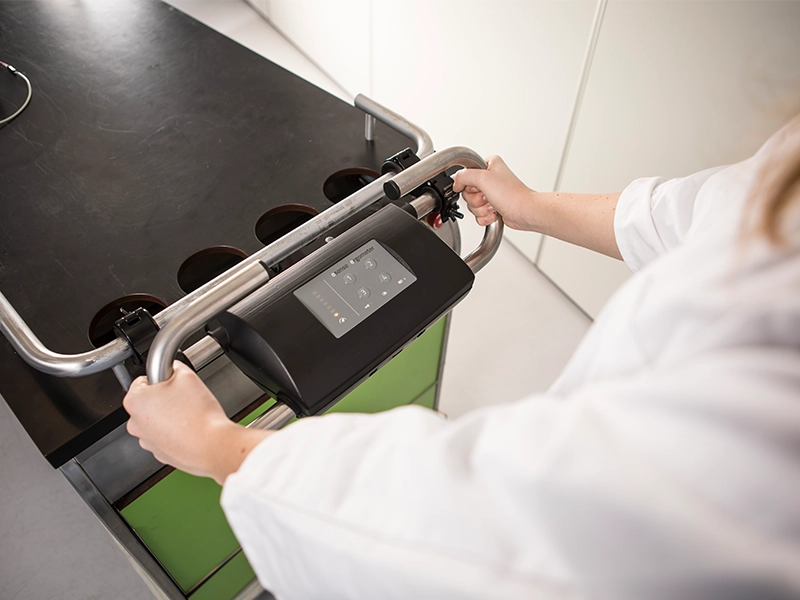
The Esense Ergometer focuses on force-related ergonomic parameters relevant for ergonomics:
These measurements can be directly compared to ergonomic guidelines (such as Snook tables or ISO standards), helping to identify overload risks and improvement opportunities.
ISO 11228-2 guidelines for pushing and pulling
Use of the Esense Ergometer is simple and designed for practical use on-site:
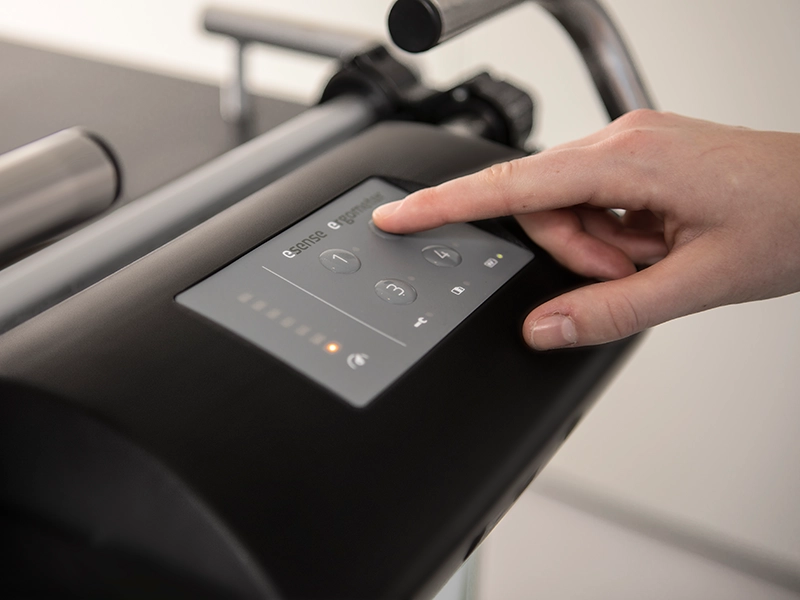
Measuring is the first step to improving. The Esense Ergometer helps you:
Read how Liberein improved ergonomics by using the Ergometer
Use the Esense Ergometer when you need reliable, real-world data to support a decision.

Objective measurement in real working conditions. Watch the video to see how it works.


 Vraag brochure aan


