- Trusted electric drive solutions
- 35+ years of innovation expertise
- Built-in integration & retrofit


Ergonomics in healthcare focuses on creating safer and more efficient working environments for healthcare staff and caregivers. It aims to reduce physical strain and manual handling risks, improve posture and support safer working practices and workplace ergonomics. This includes optimising workstations, adjusting procedures and using ergonomic equipment and powered handling solutions that reduce physical effort.
Although ergonomic principles have existed for centuries, ergonomics became widely adopted in healthcare during the late 20th century as research highlighted the high rates of work-related musculoskeletal disorders (MSDs) among nurses, healthcare staff and support workers. Since then, ergonomics has become a standard part of healthcare workplace design and safe patient handling and manual handling practices.

Healthcare staff regularly perform physically demanding manual handling tasks such as lifting, pushing, pulling and repetitive movements. Without ergonomic support, these tasks can lead to injuries, fatigue and reduced efficiency and increased sickness absence. Effective ergonomics helps to:
More about ergonomics in healthcare
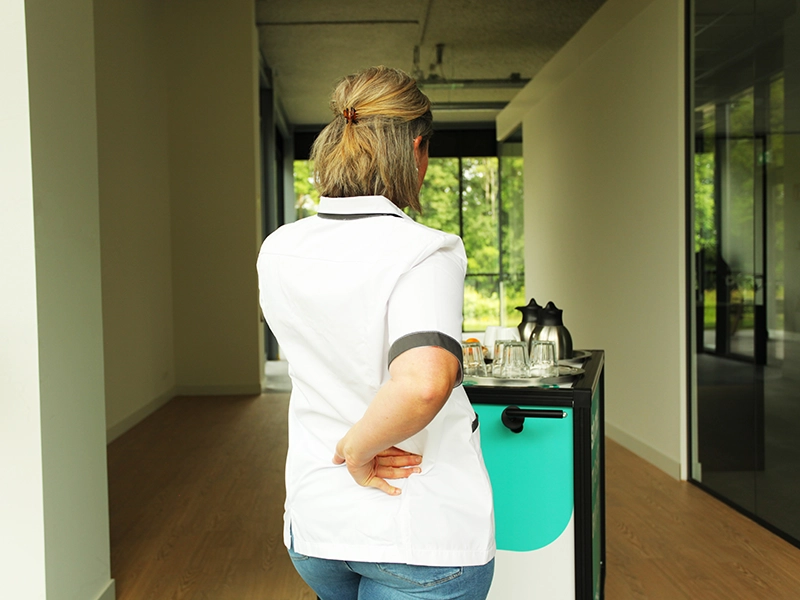
Ergonomic improvements may include manual handling task redesign, better layout planning, training in safe manual handling techniques and using equipment that minimises physical effort. Examples include height-adjustable work surfaces, improved wheel quality on trolleys and powered drive assistance systems that reduce manual handling forces in the healthcare sector.
More about powered mobility drive systems
Ergonomic tools and powered technologies that reduce manual force, such as powered mobility systems available in the UK or ergonomic lifting aids, play a crucial role. They help healthcare staff move equipment and patients with reduced physical effort, supporting HSE manual handling guidance and workplace ergonomics and reducing the risk of musculoskeletal disorders and workplace injuries.


 Vraag brochure aan


