- Trusted electric drive solutions
- 35+ years of innovation expertise
- Built-in integration & retrofit


In workplace ergonomics and manual handling assessment, an ergometer is a tool used to measure push and pull forces during real workplace conditions, such as moving trolleys, beds or patient hoists. The goal of using an Ergometer is quantifying workplace physical strain during manual handling tasks. This makes it possible to assess whether a task is safe, efficient, and aligned with HSE manual handling guidance and ergonomic standards.
The Esense Ergometer is specifically developed for these applications, helping organisations gain objective insight into workplace manual handling risks.
The Esense Ergometer works by measuring the force applied while a user performs a normal manual handling movement. The device is placed directly on the handles of the object (for example a trolley, patient hoist or hospital bed). While the task (moving, manoeuvring, pushing or pulling the object) is performed, it continuously records force data via integrated sensors. This allows you to capture:
Because measurements are done in real working conditions (including floors, thresholds, and slopes), the data reflects actual physical effort required from staff, not theoretical values.
Learn more about theesense Ergometer
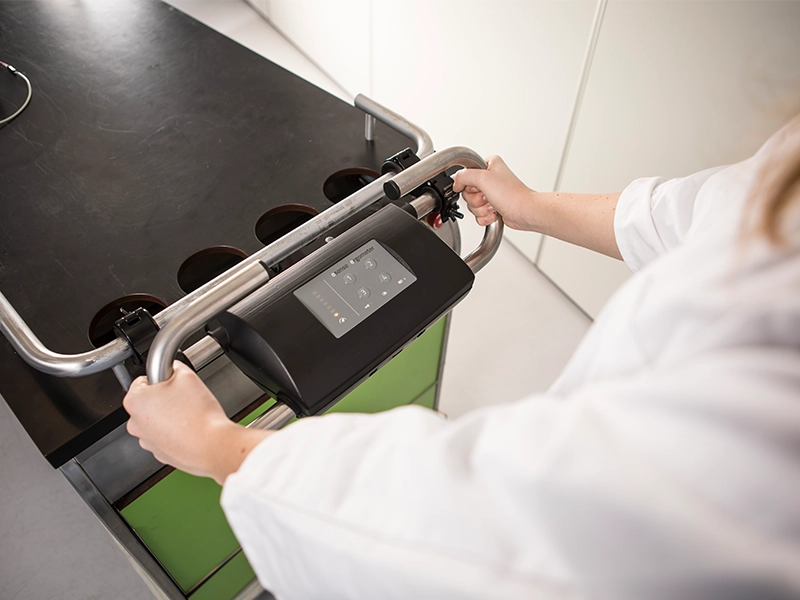
The Esense Ergometer focuses on force-related parameters relevant to workplace ergonomics and manual handling:
These measurements can be directly compared to ergonomic guidelines (such as HSE guideline figures, Snook tables or ISO standards), helping to identify manual handling risks and ergonomic improvement opportunities.
ISO 11228-2 guidelines for pushing and pulling
Use of the Esense Ergometer is simple and designed for practical use within workplace environments:
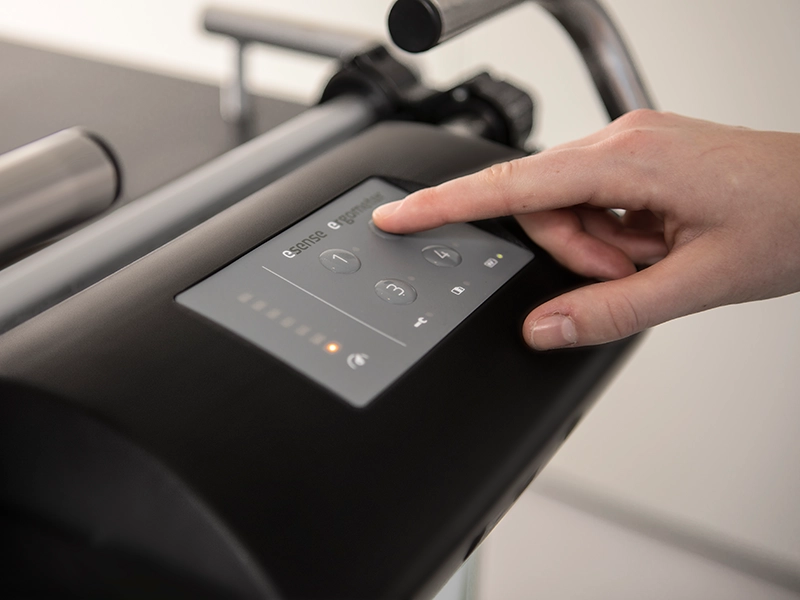
Measuring is the first step to improving. The Esense Ergometer helps you:
Read how Liberein improved ergonomics by using the Ergometer
Use the Esense Ergometer when you need reliable, real workplace data to support a decision.


 Vraag brochure aan


