- Trusted electric drive solutions
- 35+ years of innovation expertise
- Built-in integration & retrofit


At UMC Utrecht (University Medical Center), heavy hospital tool trolleys are moved daily by the Technical Service Department. Repetitive pushing and pulling of heavy trolleys created high physical strain for service technicians and increased the risk of musculoskeletal complaints and sick leave. Analysis of absenteeism data showed that in 25% of cases, pushing and pulling these trolleys was a major cause of physical overload.
The organization wanted to understand: How high is the actual physical strain? And what are the benefits of workplace ergonomics in terms of cost reduction, efficiency, and ROI?
To gain objective insight into these questions, the Esense Impact Analysis was deployed.
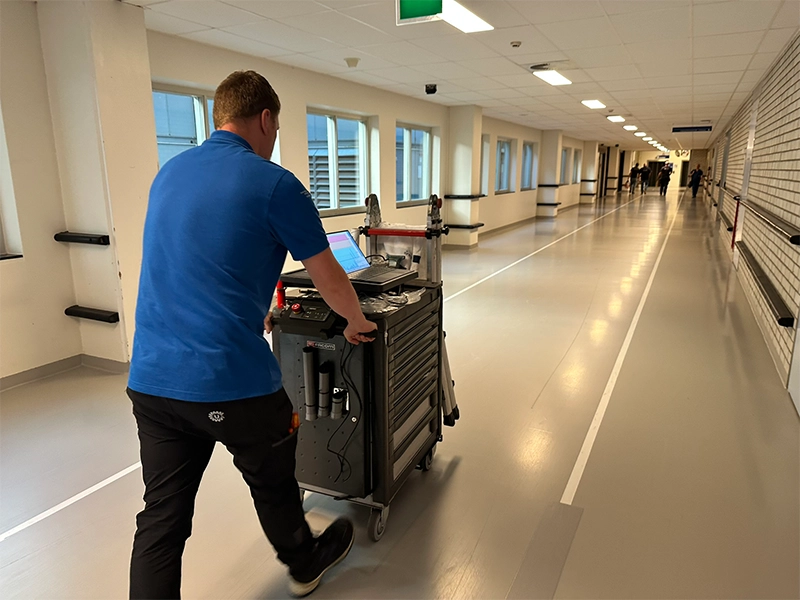
Using an esense FieldFit system and the Esense Ergo App, push and pull forces were measured during manual movement of a tool trolley as well as during a test run with esense drive assistance.
Using the correct ergonomic parameters, such as push handle height, user profile, and the limit values defined in ISO 11228-2, the actual measured forces were accurately compared to the international ergonomic standard. The results were clear:


The Health Analysis clearly demonstrates where physical risks occur and how ergonomic working directly contributes to a healthier and safer work environment.
The ROI Analysis focused on two key factors that directly impact costs and return on investment:
By lowering push and pull forces, the risk of back, neck, and shoulder complaints is significantly reduced. The analysis quantified the potential savings achieved through reduced absenteeism caused by physical overload.
With esense, employees move more quickly and smoothly through long hospital corridors. This generates measurable daily time savings, which also represents direct financial value.
The Esense Impact Analysis demonstrated that the financial benefits clearly outweigh the investment costs of the system, fully based on real operational data from the working environment at UMC Utrecht.

Discover your ergonomic savings, contact us!
Employees immediately reported that their daily work work became significantly less physically demanding. Moving trolleys required less force and resulted in less strain on the back and neck.
“The difference is enormous. The trolley moves so much easier, and I no longer experience back pain.”
Employee at UMC Utrecht

*Based on a 10-year product lifetime
With esense FieldFit, UMC Utrecht improved hospital trolley ergonomics, reduced physical strain for employees, and achieved measurable ROI through safer and more efficient hospital transport.


 Vraag brochure aan


